GS1-128 Pharmaceutical Barcode Guide
Master the global standard for drug serialization. This guide explains how to format GS1-128 barcodes for strict regulatory compliance.
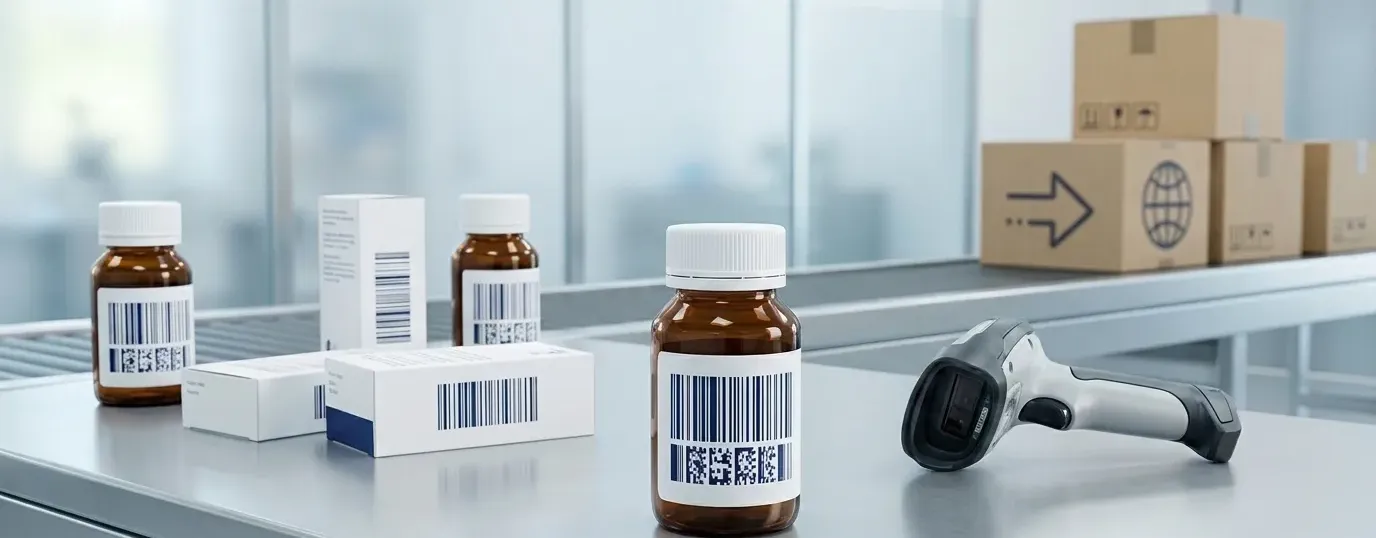
Why Pharma Relies on GS1-128
In the pharmaceutical supply chain, accuracy isn't just about operational efficiency—it's a matter of critical patient safety. Regulatory frameworks worldwide, such as the Drug Supply Chain Security Act (DSCSA) in the United States and the EU Falsified Medicines Directive (FMD) in Europe, legally mandate the use of GS1-128 barcodes on secondary packaging (like cardboard cases).
This format is chosen because its concatenation ability allows a single warehouse scan to instantly capture the product identifier, batch number, unique serial number, and expiration date simultaneously. This ensures that counterfeit drugs cannot easily enter the legitimate supply chain, and recalls can be executed with surgical precision.
Serialization Tool: GS1-128 Generator
Use the tool below to generate compliant GS1-128 strings for single units or entire production batches. Enter your data using standard Application Identifiers (AIs) in parentheses, or use the Guided Mode to safely fill in fields for GTIN, Expiry, and Batch without worrying about FNC1 characters.
Pharma Output
(01)09501234567890(17)251231(10)LOT123A(21)10001
Understanding Application Identifiers (AIs)
The "magic" of GS1-128 lies entirely in its Application Identifiers—the predefined numbers enclosed in parentheses that explicitly define what the following data represents. For pharmaceutical serialization and DSCSA compliance, four specific AIs are absolutely essential:
- (01) GTIN: The Global Trade Item Number (exactly 14 digits) identifying the specific drug type and dosage.
- (17) Expiry: The expiration date strictly in YYMMDD format.
- (10) Batch: The batch or lot number (alphanumeric, up to 20 characters).
- (21) Serial: The unique serial number for that specific printed unit (alphanumeric, up to 20 characters).