QR Code vs. Aztec Barcodes
Comparing 2D barcodes for transit. Learn why the Aztec Code's unique lack of a quiet zone makes it the global standard for mobile ticketing.
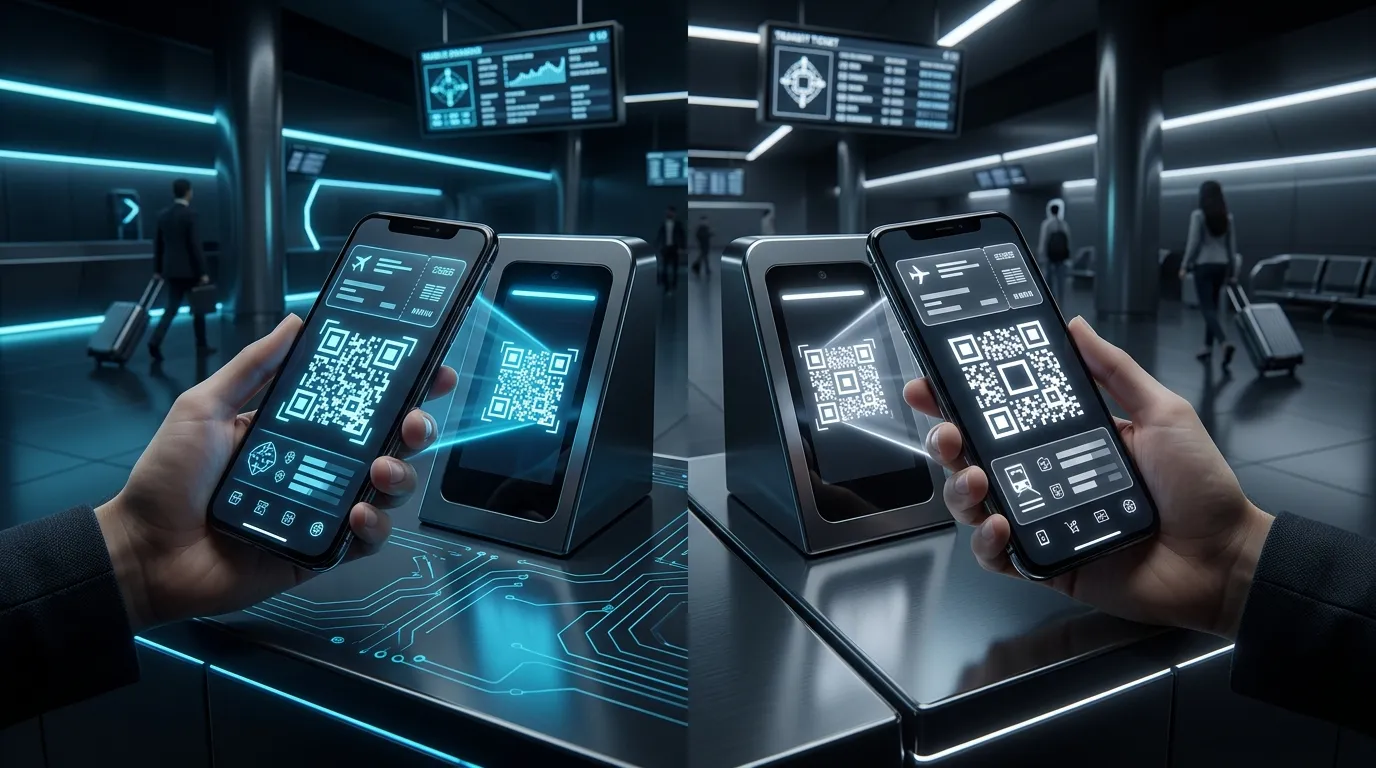
The Mobile Screen Dilemma
When designing a mobile ticketing system for airlines, railways, or concert venues, you face a unique challenge: the barcode must be scanned rapidly off a brightly lit, often smudged or cracked smartphone screen, usually at an awkward angle by a rushed passenger.
While QR Codes are extremely popular for marketing, the Aztec Code is actually the global heavyweight champion of mobile transit ticketing. The reason comes down to one technical property: the quiet zone.
The Quiet Zone Advantage
A QR Code requires a mandatory "quiet zone"—a thick, blank white border around the entire barcode. If you display a QR code right up to the edge of a smartphone screen, the scanner will fail to find the three corner squares, and the scan will fail.
An Aztec Code operates differently. Its defining feature is the central "bullseye" finder pattern. Because an Aztec Code scanner locks onto the center and navigates outward, it requires absolutely zero quiet zone.
Maximizing Screen Real Estate
Because it requires no border, an Aztec Code can be blown up to fill the entire width of a smartphone screen (edge-to-edge). This maximizes the physical size of the data modules, drastically improving the speed and success rate of scans at rapid-entry turnstiles and boarding gates.
This unique spatial efficiency is exactly why the International Air Transport Association (IATA) and national railway networks across Europe heavily rely on Aztec Codes for their mobile boarding passes.