ITF-14 vs. GS1-128 Barcodes
Comparing logistics barcodes. Learn when to use the rugged ITF-14 for direct printing vs GS1-128 for detailed shipping labels.
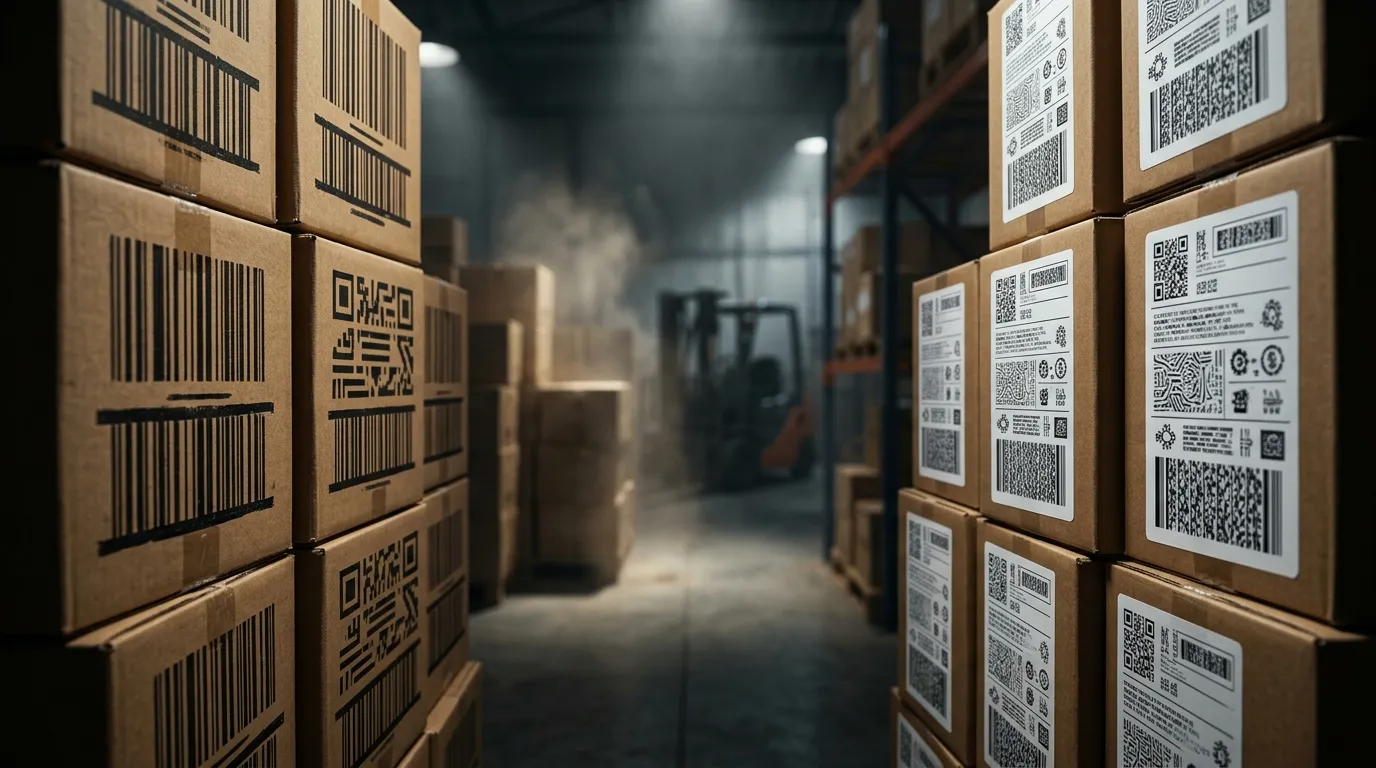
The Outer Carton Challenge
When shipping bulk products in outer corrugated cardboard boxes to distribution centers, you must choose a logistics barcode. The two global GS1 standards for carton tracking are ITF-14 and GS1-128.
The choice between them is not about personal preference; it depends entirely on how the barcode will be printed and what data it needs to hold to satisfy your retail partner's compliance manual.
ITF-14: The Rugged Survivor
ITF-14 (Interleaved 2 of 5) is a highly rugged, 14-digit numeric barcode surrounded by thick black borders known as bearer bars.
ITF-14 has one superpower: it is specifically designed to be printed directly onto raw, low-quality brown corrugated cardboard. Because cardboard is highly porous, ink bleeds and spreads when applied. ITF-14 is mathematically designed with wide tolerances so that even if the ink spreads heavily, warehouse lasers can still read it perfectly. However, it can only hold exactly 14 digits—nothing else.
GS1-128: The Data Powerhouse
GS1-128, conversely, is a high-density alphanumeric barcode capable of storing massive amounts of dynamic data. Using GS1 Application Identifiers, a single GS1-128 barcode can encode the product ID, the exact Batch/Lot number, the expiration date, and a unique serial number all at once.
The catch? Because it encodes so much data in a small space, the bars and spaces are very thin. You cannot print GS1-128 directly on cardboard. The ink bleed will destroy the symbol. GS1-128 must be printed on a high-quality white paper label and applied to the box as a sticker.